
Sometimes a really nice looking landscape will feature trees planted in beds that are mounded up above the surrounding grade. When done properly, this can yield an esthetically superior result. However, after the tree has been planted, piling mulch against the trunk to achieve a similar look is a very bad idea.
Sometimes mulch is piled high against the trunk of a tree, steeply sloped, resembling a volcano. Other times, more mulch is used to create a wider mound around the base of the tree. While some may believe the mulch create a visually appealing landscape, this practice can be detrimental to the health and longevity of trees. Two inches is usually the ideal depth for mulch. More than three inches is generally unacceptable. Further, at the trunk, the mulch depth should be reduced to zero inches, or no more than one inch.
Girdling Roots
When mulch is piled against a tree trunk, it encourages the growth of roots in the mulch. These roots can eventually encircle and constrict the trunk, a condition called girdling. Girdling restricts the flow of water and nutrients between the roots and the canopy, weakening and potentially killing the tree.
Trunk Rot
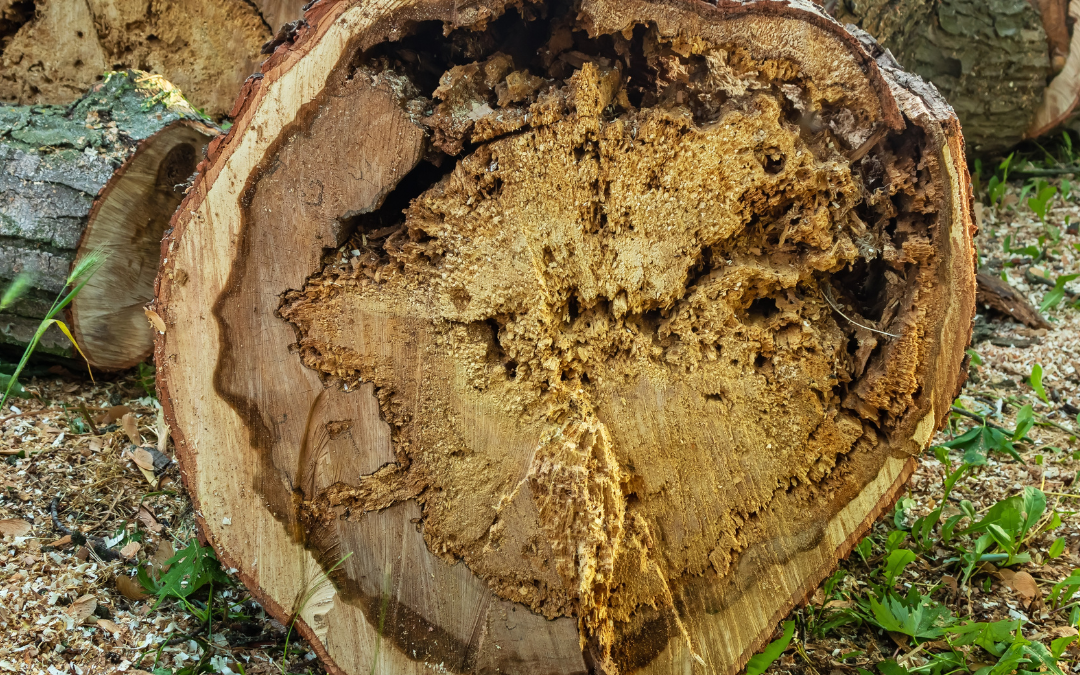
The constant moisture and lack of air circulation caused by volcano mulching can lead to the decay of the tree’s trunk and buttress roots. This rot can weaken the tree and make it more susceptible to falling or breaking at the base, especially strong winds.
Pest and Disease Infestation
The moist environment created by volcano mulching, or applying too thick a layer of mulch, provides an ideal habitat for pests and diseases. Insects, fungi, and other harmful organisms thrive in the damp, dark conditions, increasing the risk of infestation and infection.
Instead of volcano mulching, it is best to widen the mulch ring as the tree grows larger, carefully removing turf grass as needed. This allows for proper air circulation and prevents the problems associated with volcano mulching.